Keysight PathWave Design
During the summer school break of 2020, I did a 6-week internship at Keysight Technologies in their PathWave Design division of Ghent, Belgium. The work was research focused and I provided a feasibility study of a brand new idea that had never been explored by competitors or the literature, to my knowledge. I gained hands-on experience with several of Keysight's full-wave EM simulation tools, learned much about signal theory and coded simplified solvers from scratch in Python.
Keysight's PathWave Design division is a major player in the electronic design automation industry. I contacted Jan Van Hese, the project manager of the team, because I wanted to obtain hands-on experience with simulation tools in the industry. The COVID-19 pandemic forced us to do the internship fully online.
The company's simulation engines can be roughly divided into time domain (FDTD) and frequency domain (FEM & MoM) solvers. The former is especially useful for the study of transients in the far-fields in the context of EMI & EMC problems. The latter however provides other advantages. Jan Van Hese proposed the unexplored idea to research the use of a Fourier transform to convert far-field results to the time domain. This allows us to harness the advantages of frequency domain solver while being able to simulate transient phenomena.
Some highlights of a presentation I did for the R&D team:
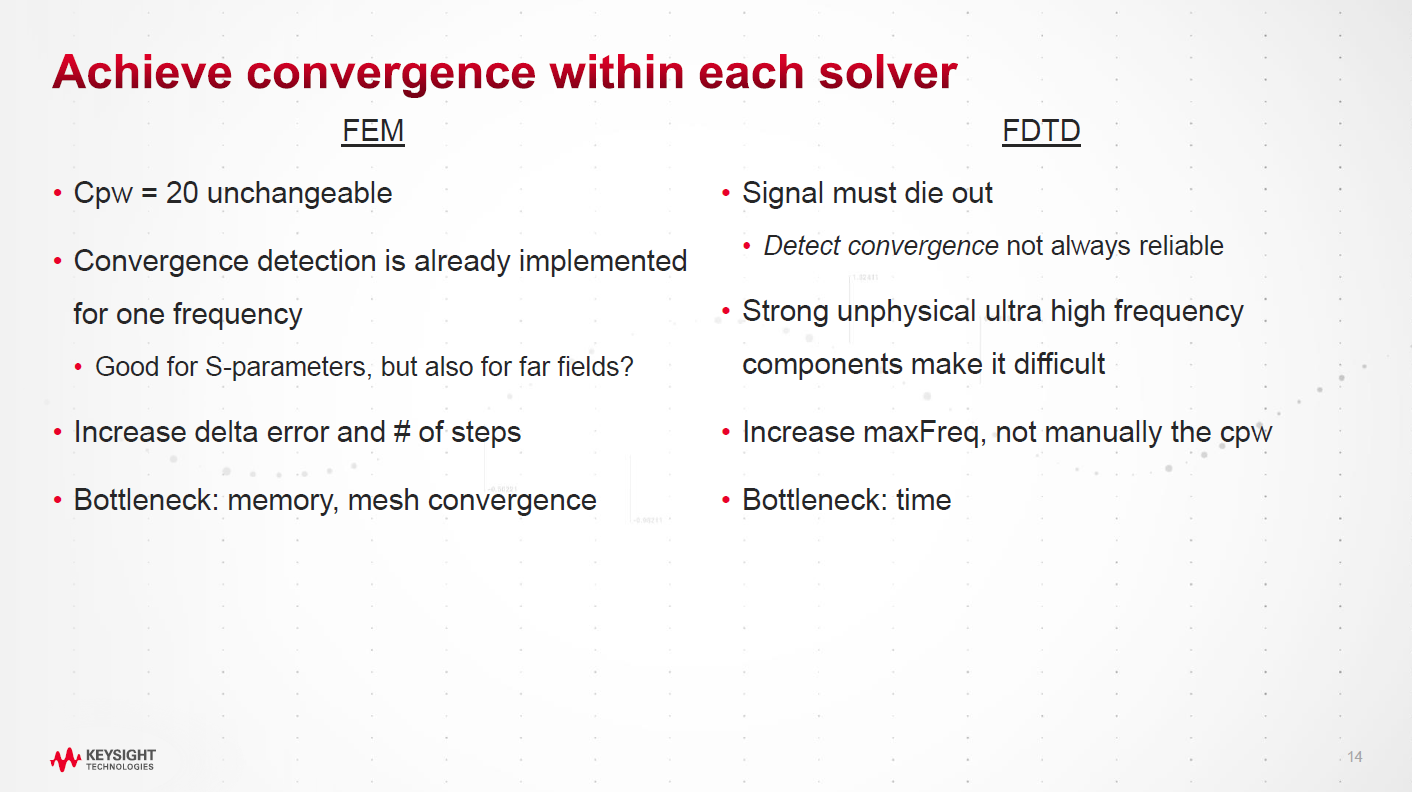
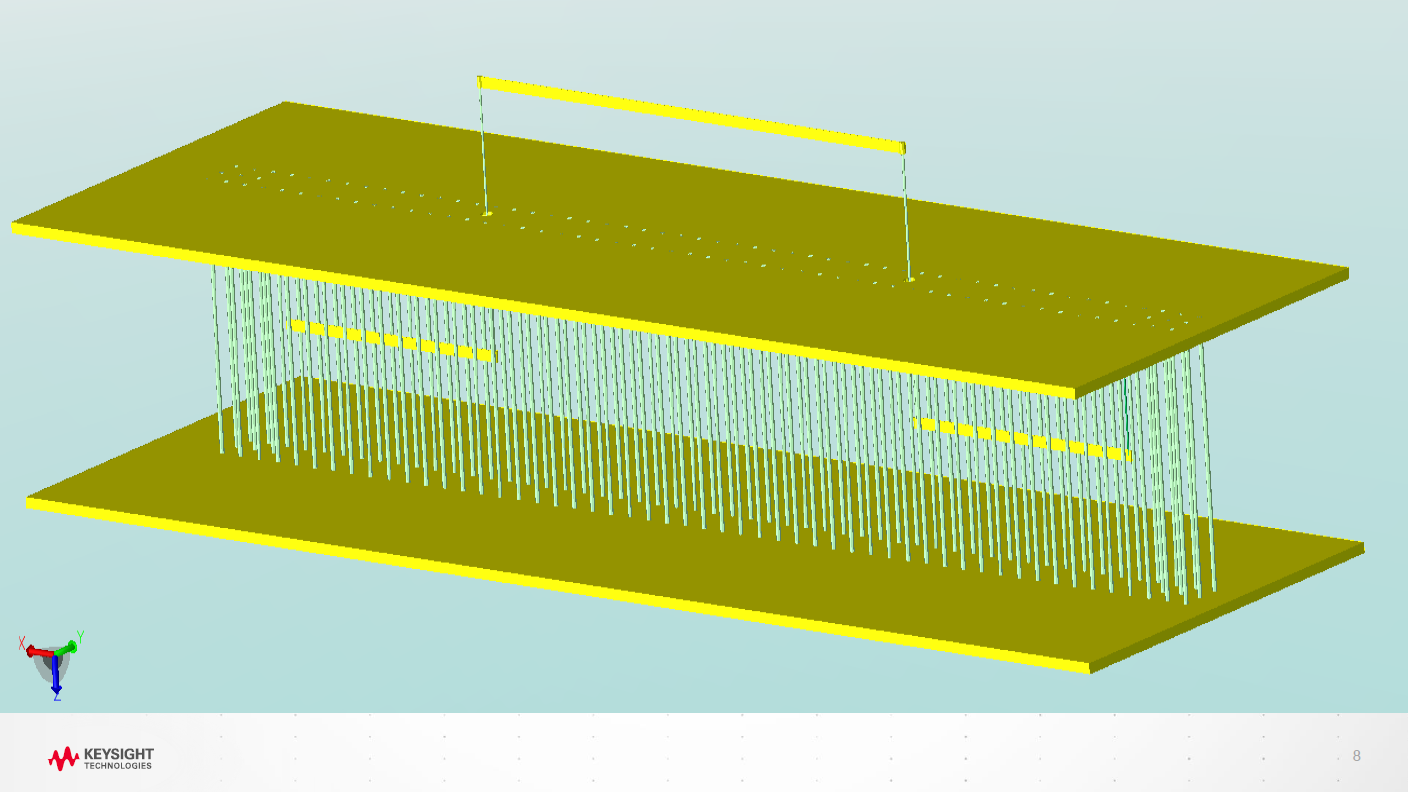
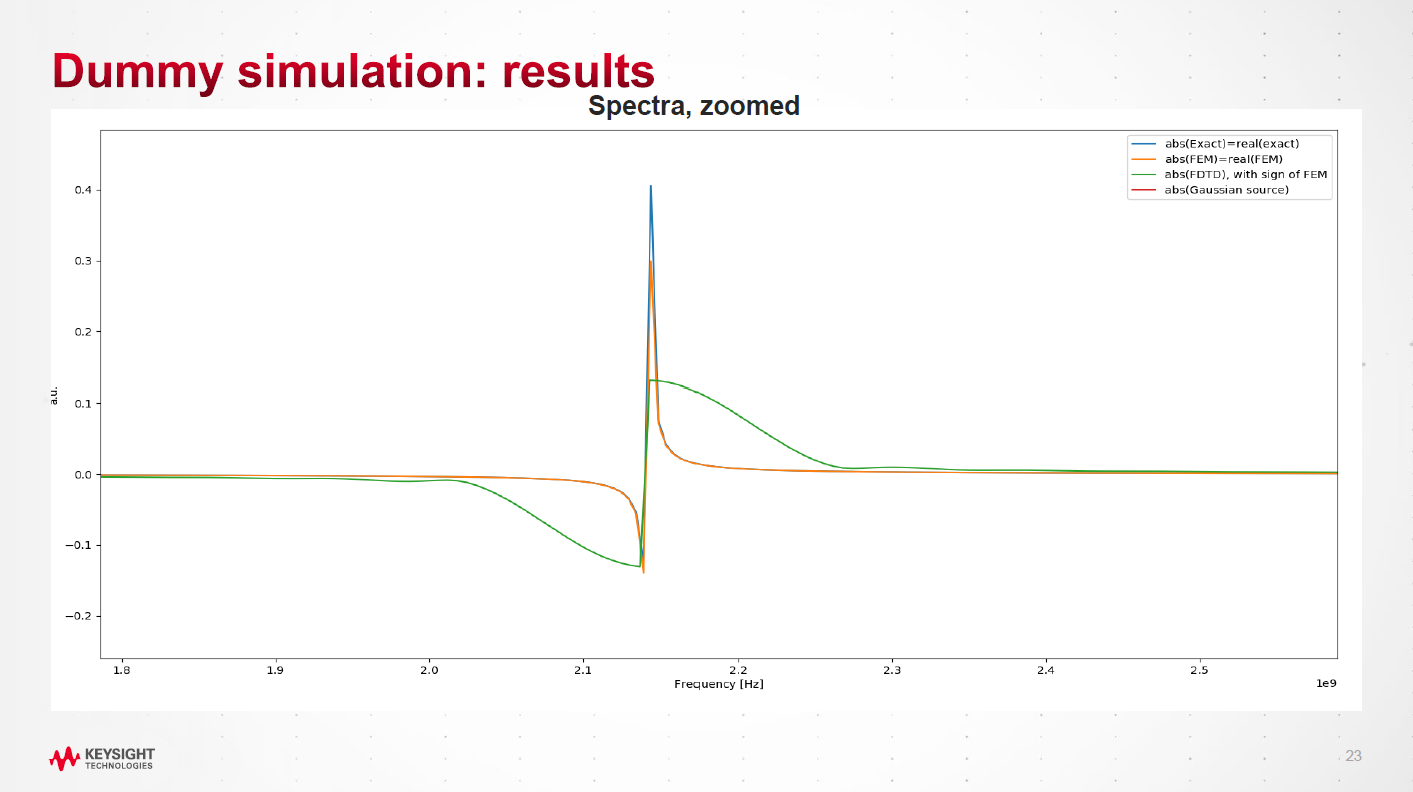
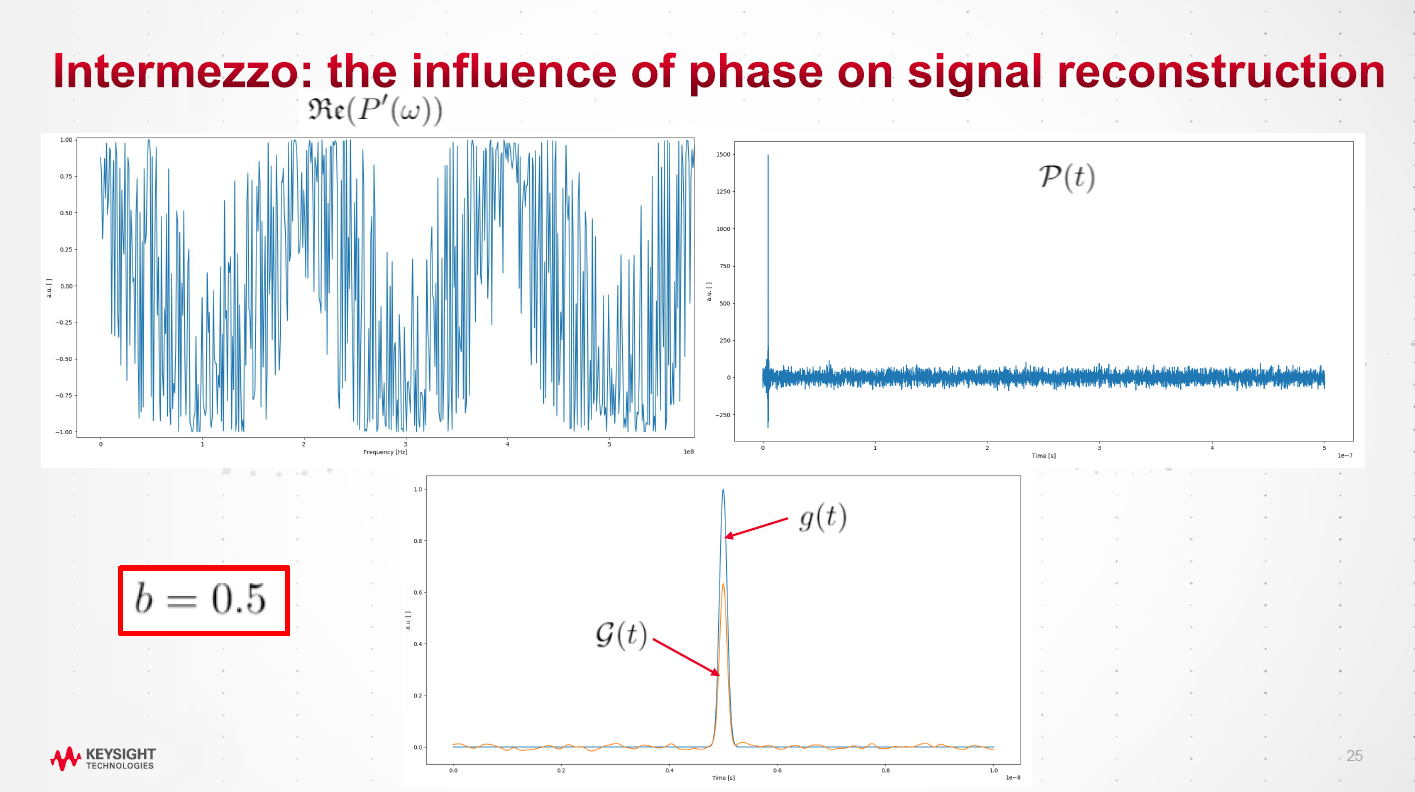
I started by learning to use the available software tools EMPro, ADS and RFPro as well as their scripting API ffio for read-out. In parallel with a literature study, I started looking for convergence between FDTD and FEM response spectra. During the former, my acquired simulation knowledge proved very useful but I also learned much about signal processing (deconvolution algorithms, windowing, Fourier transforms, ...) and electrical engineering (EDA, TDR/TDT, EMI/EMC, ICs, ...). The latter took more than reasonable amounts of computation time to achieve a perfect match. This combined with theoretical doubts prompted me to take a step back from the engineering problem and focus on more theoretical feasibility considerations. I did this by coding from scratch in Python a FEM and FDTD script with a stretched coordinate PML and compared with analytical solutions. This gave me the insight that phase played an intricate role in the research question at hand. Armed with new ways to look at the problem, I returned to analyze the engineering problem in EMPro. I was able to give a conclusion to the team for feasibility and provided multiple leads for further research.
I am very glad to have participated in this internship and especially thank my supervisor dr. ir. Jan Van Hese for his thorough and continued support during the internship. He was always open to answer any questions I had and provided helpful guidance in a professional manner when I did not know what the next step was. I would also like to thank the entire R&D team in Ghent for all the other questions or troubles I had.